
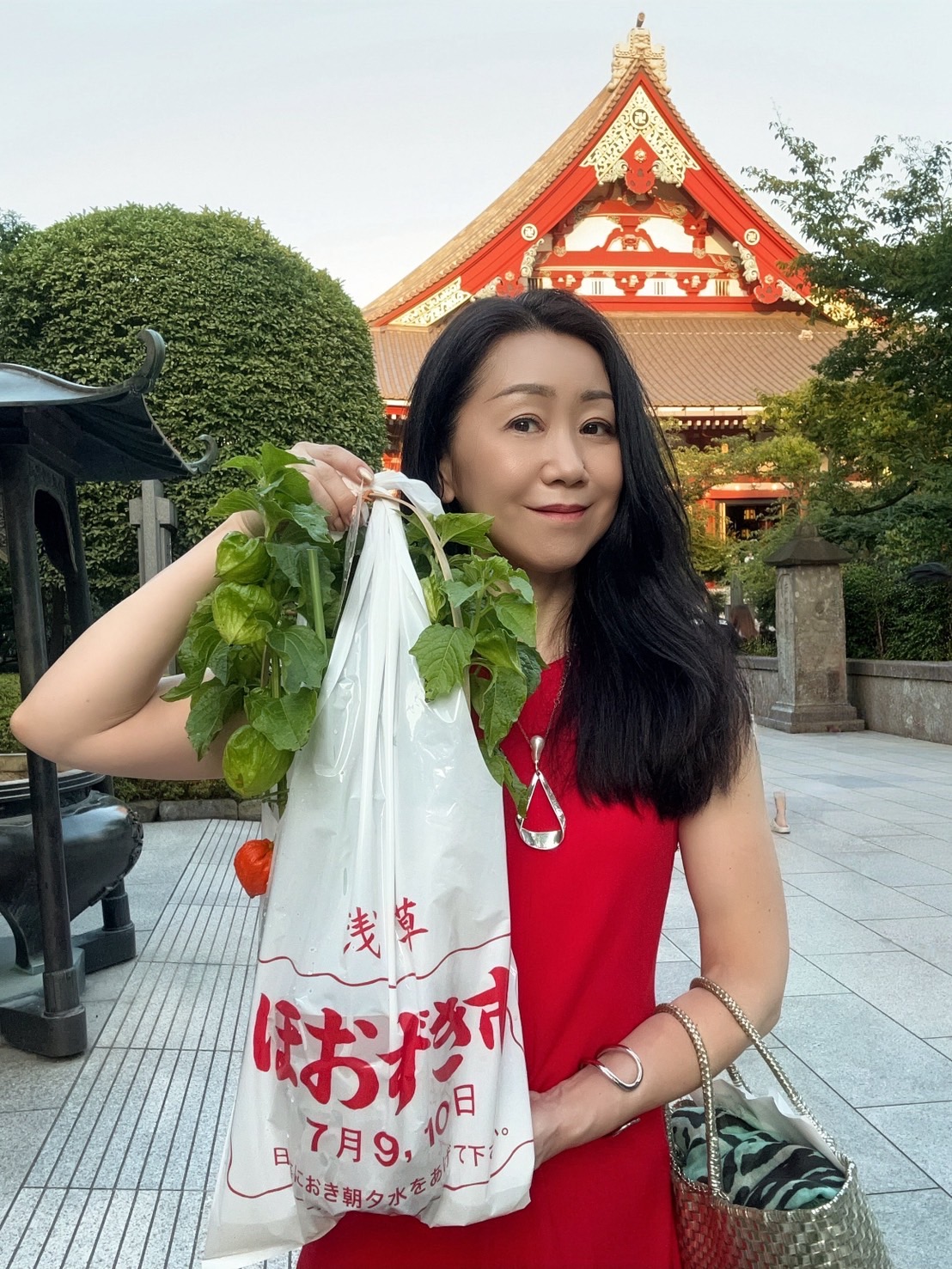
先日、浅草寺の四万六千日詣に行ってまいりました。
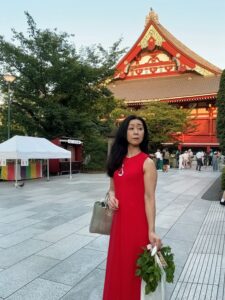
7月10日に観音様へお参りすると、一生分(四万六千日分)の功徳が得られる
とされる特別な日。
江戸時代には、その功徳にあやかろうと、われ先に参拝しようとする人々で前日の7月9日から境内は賑わったそうです。
この日に合わせて開かれる「ほおずき市」も、この時期ならではの風物詩です。私も足を運びました。
私は生花を長く学んできた私は、これまでほおずきは夏の枝物という印象しかありませんでした。
ところが、ほおずき市でお店の方から、ほおずきはお盆にご先祖様が迷わず帰ってこられるよう、提灯に見立てて飾られることを教えていただき、私も一鉢買いました。
季節の行事と、その時期に飾る花には、一つひとつ意味や願いが込められていることを知り、日本文化の奥深さを改めて感じました。
歴史や由来を知ることで、季節の行事や文化をこれまで以上に深く味わうことができます。
今年のお盆は、教えていただいた由来を思い浮かべながら、買ってきたほおずきを飾り、ご先祖様をお迎えしたいと思います。
Experiencing the Depth of Japanese Culture at the “46,000 Days” Pilgrimage
The other day, I visited Senso-ji Temple for the “46,000 Days” pilgrimage.
It is said that visiting the Kannon deity on July 10th grants a person the equivalent of a lifetime’s worth of spiritual merit—specifically, merit equal to 46,000 days of worship.
Back in the Edo period, the temple grounds would bustle with crowds as early as July 9th—the day before—with people eager to be the first to pray and receive this blessing.
The “Hozuki (Chinese Lantern Plant) Market,” held to coincide with this day, is another seasonal tradition unique to this time of year; I made sure to visit it myself.
Having studied flower arranging for a long time, I had previously thought of the hozuki simply as a type of summer branch foliage.
However, at the market, a vendor explained that they are displayed to resemble lanterns, guiding ancestors home without them losing their way during the Obon festival. Moved by this, I bought a potted plant for myself.
Learning that each seasonal event and the flowers displayed during them hold specific meanings and wishes made me appreciate the profound depth of Japanese culture once again.
Understanding the history and origins allows us to experience seasonal events and culture more deeply than ever before.
This Obon, I look forward to welcoming my ancestors while displaying the hozuki I purchased, keeping in mind the story behind them.

 浦川美智子
浦川美智子 森本理加
森本理加 丸岡舞美子
丸岡舞美子 石井智恵
石井智恵 田中たけし
田中たけし