
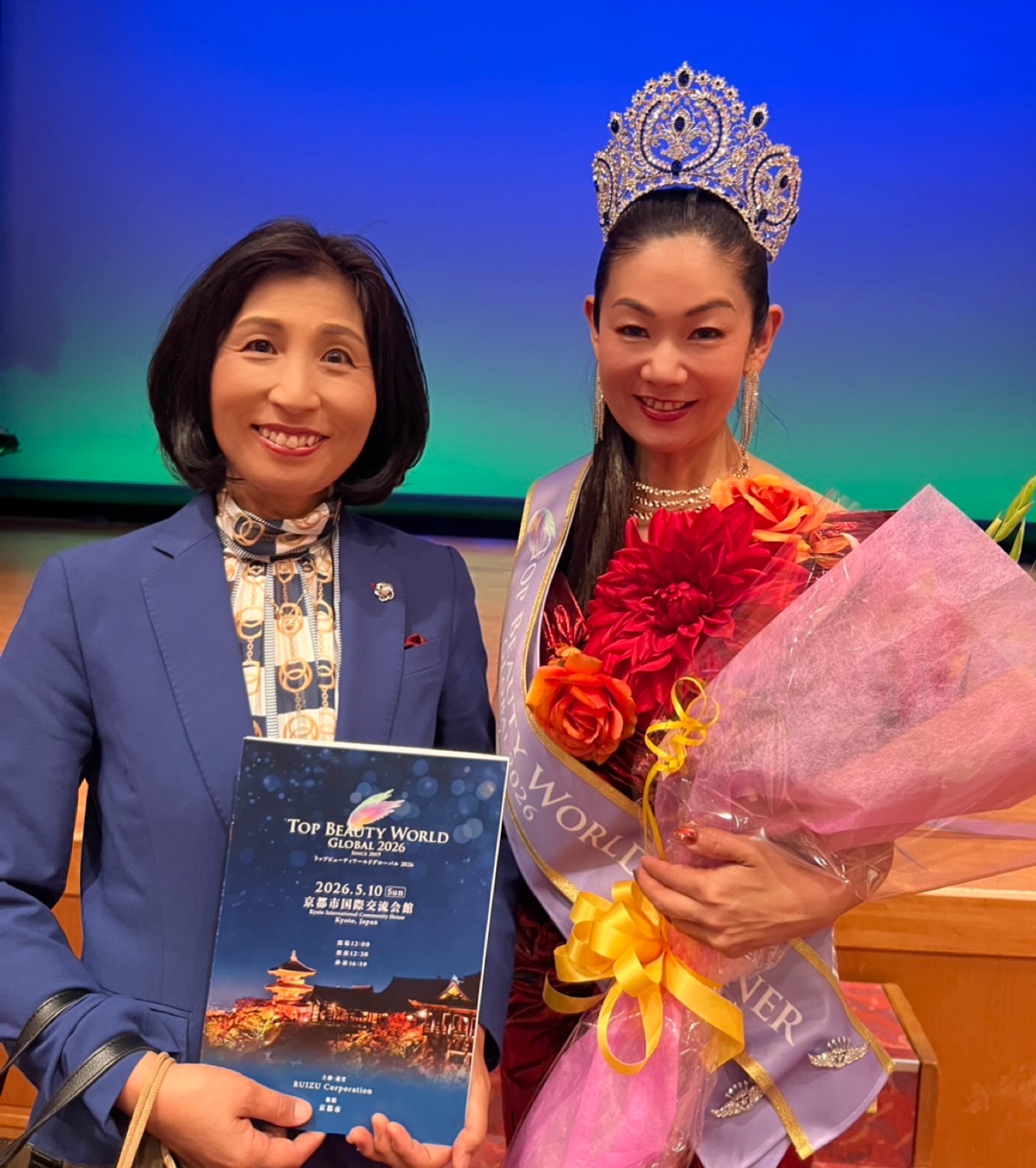
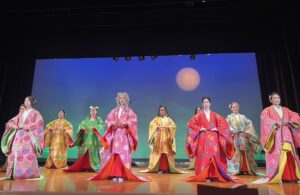
5月10日、京都で開催された「トップビューティワールドグローバル2026」に来賓審査員として出席をさせていただきました。今回のビューティコンテストでは平安装束を身にまとい現代ファッションと融合させて競い合う場面がありあらためて日本の美の基準について考える機会になりました。
そもそも平安時代の美の価値観はどのようなものだったのでしょう。
当時は襲(かさね)といわれる襟元や袖口の何枚も重ねた色合わせの調和や長く艶やかな黒髪、白粉、紅、お歯黒や眉そして所作。顔を扇で隠し静かに歩くことが美しく優雅とされていました。
現代の美の基準とは全く違っていて、見えたり見えなかったりする場所に配慮し、また静寂の中に光り輝くセンスが問われる時代だったといえます。
日本の美の歴史をひも解いていくと時代とともに変遷していますが、他者への思いやりや配慮、そして四季折々の移ろいなど自然に対する感受性を豊かに表現していくことは今も昔も変わらない美の基準になっていると感じます。
京都滞在中は貴船神社や瑠璃光院また足を延ばして比叡山延暦寺にも伺い初夏の美しい景色を楽しんで大いにリフレッシュしてきました。
貴重な機会をいただきました主催の和泉カオル様、浦川美智子理事長に心から感謝申し上げます。
“The Standards of Beauty in the Heian Period and the Modern Era”
On May 10th, I had the honor of attending “Top Beautyworld Global 2026,” held in Kyoto, as a guest judge. This year’s beauty contest featured a segment where contestants competed by blending Heian period attire with modern fashion, providing an opportunity to reconsider the standards of Japanese beauty.
What were the values of beauty in the Heian period?
At that time, beauty was considered elegant and graceful, encompassing the harmonious combination of colors in layered garments (kasane) around the collar and cuffs, long, lustrous black hair, white powder, rouge, blackened teeth, eyebrows, and graceful movements. Concealing one’s face with a fan and walking quietly was also considered beautiful and elegant.
This is completely different from modern beauty standards; it was an era where consideration was given to what was visible and what was not, and where a sense of brilliance shone through silence.
As we delve into the history of Japanese beauty, we see how it has changed with the times, but I believe that the rich expression of compassion and consideration for others, and a sensitivity to nature, such as the changing seasons, remains a constant standard of beauty, both then and now.
During my stay in Kyoto, I visited Kifune Shrine and Rurikoin Temple, and also extended my trip to Enryaku-ji Temple on Mount Hiei, enjoying the beautiful scenery of early summer and feeling greatly refreshed.
I would like to express my sincere gratitude to Ms. Kaoru Izumi, the organizer, and Ms. Michiko Urakawa, the chairperson, for giving me this valuable opportunity.

 浦川美智子
浦川美智子 森本理加
森本理加 丸岡舞美子
丸岡舞美子 石井智恵
石井智恵 田中たけし
田中たけし 有賀俊行
有賀俊行